
Reality check: Why normal solutions won't work and what might
You vote. Nothing changes. You vote again. Still nothing changes.
You're not imagining it.
In 2024, one billionaire—Elon Musk—spent $288 million electing politicians. That's more money than most people will see in 100 lifetimes. From one person.
Tech companies spent $482 million on lobbying over ten years. They donated millions to Democrats AND Republicans.
Your vote matters. But their money matters more.
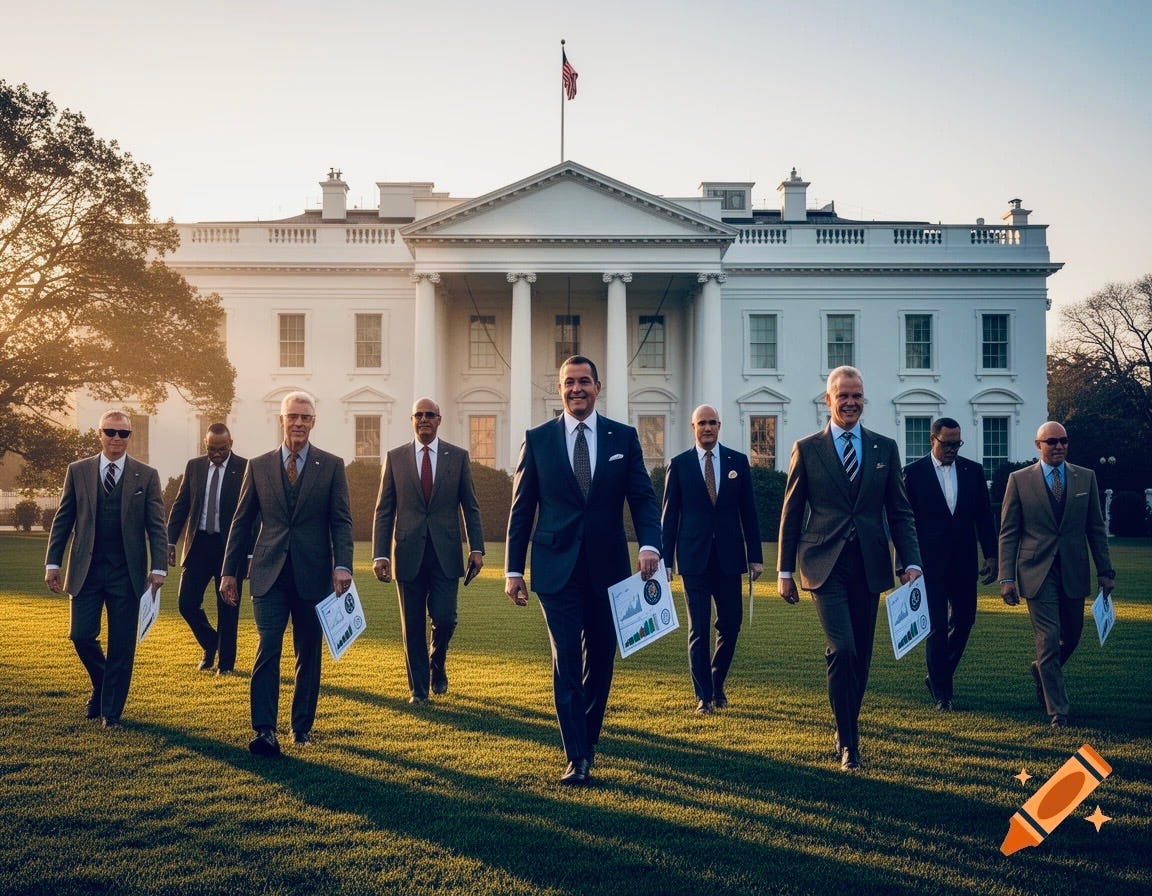
Until you understand how the money works, you'll keep wondering why nothing ever changes—no matter who you elect.
In my previous essay, I showed you the chaos culture: how tech giants profit from keeping you angry, divided, and scrolling. How billionaire wealth hit over $18 trillion last year, profits used to fracture democracy and squash oversight.
But I didn't show you the most important part: how they spent that money to make sure democracy could never fight back.
This is that story. And it explains why every conventional solution you've heard—campaign finance reform, antitrust enforcement, voting harder—won't work without something more fundamental.
The Purchase: What Money Buys
After Trump wins the 2024 election, something remarkable happens.
One by one, tech CEOs who spent years opposing Trump make pilgrimages to his Mar-a-Lago estate.
Mark Zuckerberg—who banned Trump from Facebook after January 6.
Jeff Bezos—whose Washington Post Trump attacked relentlessly.
Tim Cook. Sam Altman. Sundar Pichai.
All making the journey. All suddenly eager to meet with the man they'd opposed.
Then came the money. Trump Inauguration Fund donations totaling millions from Meta, Amazon, OpenAI, Apple, and Google.
Trump once threatened to jail Mark Zuckerberg. Now here he is with four other tech leaders, all donating.
You watched this happen. Maybe you wondered: What changed?
Nothing changed. Everything became clear.
They weren't switching sides. They were revealing what side they'd always been on: their own.
Musk's Investment
But these million-dollar donations are pocket change compared to the real purchase.
Elon Musk's total contribution to Trump's 2024 campaign: $288 million. The largest political donation in U.S. history.
For Musk—worth over $600 billion—this was a fraction of a percent of his wealth. Like someone worth $100,000 donating $47.
What did it buy?
Direct access: Senior Advisor to the President. De facto head of DOGE (Department of Government Efficiency)—created specifically for him. Regular White House presence. Influence over agencies investigating his companies.
Regulatory immunity: Musk didn't just get protection from regulation. He got to dismantle the regulators themselves. As head of DOGE, he closed or stalled investigations into his companies, defunded and gutted federal agencies, and fired inspectors leading those investigations. One Senate report estimated he could avoid billions in legal liability as a result.
Personal enrichment: Within months of his endorsement, Musk's wealth surged dramatically. His companies' valuations nearly doubled. SpaceX contracts were deemed "too critical to cancel"—even when Trump threatened to revoke them during their public feud.
The message: Political spending is a profitable investment. Spend enough, and you can dismantle your investigators, secure your contracts, and operate above the law.
The Lobbying Machine
But Musk's donation is just the visible piece. The real infrastructure is lobbying—the year-after-year work ensuring both parties stay captured.
Annual lobbying expenditures:
Amazon: Over $20 million (more than any other U.S. corporation)
Meta: Nearly $20 million
Google: Over $11 million
Apple: Nearly $10 million
Every single year. Hundreds of millions ensuring every piece of legislation, every regulatory proposal, every congressional hearing tilts in their favor.
Over the past decade and a half, just three companies spent nearly half a billion dollars on lobbying. To make sure neither party would seriously regulate them.
The hidden infrastructure: Tech companies fund think tanks producing "independent" research, academic institutions (Google alone funded hundreds of papers), astroturf organizations, and former government officials as highly-paid "consultants."
When "independent experts" testify before Congress about tech regulation, they rarely disclose that Google funded their research, Meta employs them as consultants, or Amazon provides grants to their institutions.
The result: Congress hears from dozens of "experts" arguing against regulation—experts actually on the payroll.
The Bipartisan Strategy
This is the part most people miss. Tech money doesn't just go to one party. It flows strategically to both.
Democrats receive: Heavy donations from tech employees, support from liberal billionaires, corporate PAC contributions.
Republicans receive: Heavy donations from tech CEOs (Musk, Thiel, Ellison), support from conservative investors, the same corporate PAC contributions.
The result: Neither party will regulate tech seriously. Both depend on the money. Whoever wins, tech has already won.
This is regulatory corruption at scale.
But It's Not Just Protection—It's Partnership
Here's what most people don't see: The money didn't just buy deregulation. It bought lucrative government partnerships.
Tech billionaires didn't just pay to be left alone. They paid to become essential government contractors—receiving billions in public funds to build the very surveillance and control infrastructure that serves authoritarian aims.
The Revolving Door
The partnership starts with the revolving door between tech companies and agencies supposed to regulate them.
How it works: FTC or DOJ officials regulate tech companies. Those officials leave government for high-paying tech jobs. New officials see the path to wealth runs through companies they regulate. Regulation gets designed to look tough while remaining toothless.
Dozens of former FTC and Justice officials went to work for the very companies they once regulated.
The Frances Haugen case study shows the fix was already in:
When whistleblower Frances Haugen testified before Congress in October 2021, she brought smoking-gun evidence that Facebook knew what it was doing and repeatedly chose profits over public safety and civic duty.
Her testimony was damning. Documents conclusive. Public outrage real.
What happened? Nothing.
No meaningful legislation. No structural changes. Meta continued optimizing for engagement over wellbeing.
Why? By 2021, Meta had already spent years building relationships with key committee members, funding their campaigns, placing former employees on their staffs to "help navigate" any proposed regulation.
The system was already purchased.
This is the pattern that repeats: damning evidence, public outrage, media coverage—and then nothing. Because the money's already in place. The relationships already built. The revolving door already spinning.
Government Contracts Flowing Back
But here's the reciprocal exchange most people miss: While tech companies spend hundreds of millions buying access, government awards them billions in contracts.
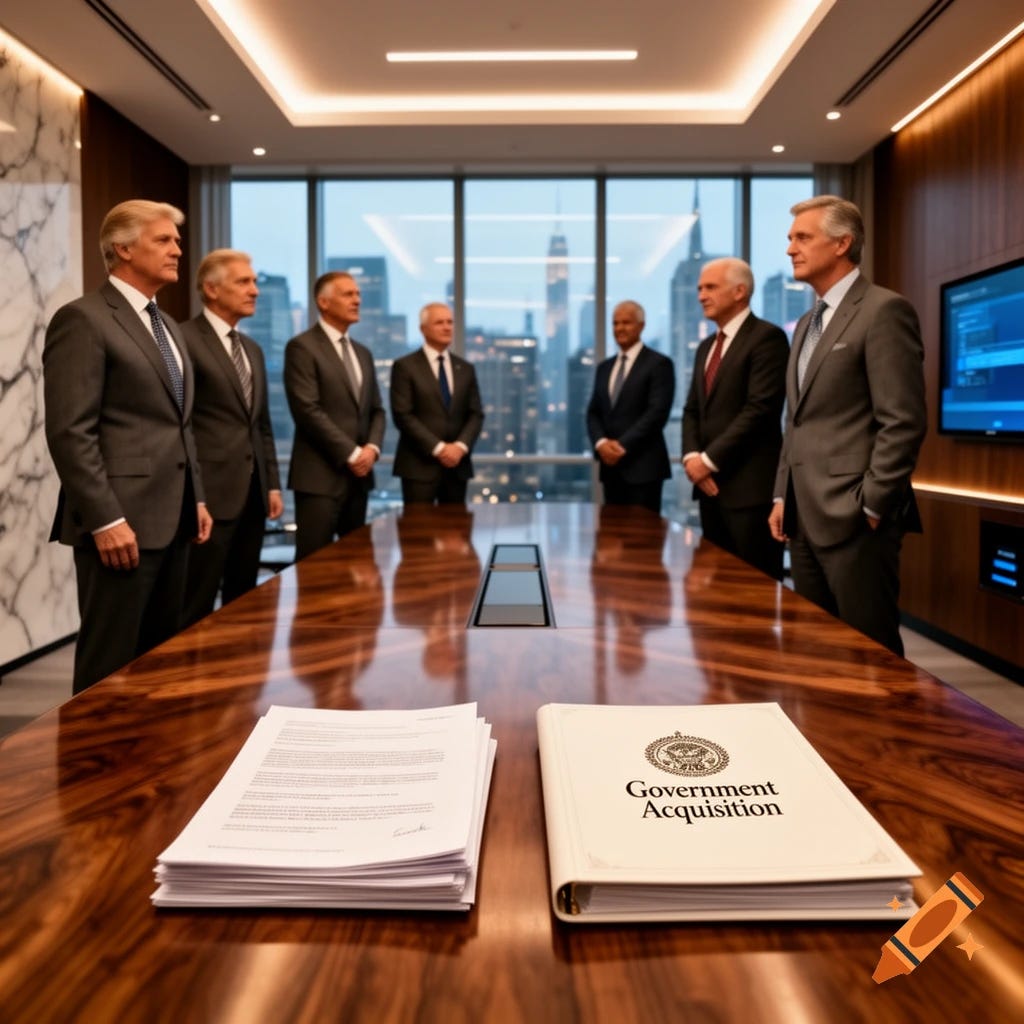
The AI infrastructure gold rush: In 2025, big tech is spending hundreds of billions on AI infrastructure. But where's that money going? To build the cloud computing and AI systems that government agencies are now dependent on.
OpenAI and Anthropic offered AI services to U.S. government agencies for nominal fees—loss leaders to establish dependency. Once embedded, these "trials" become extended contracts worth billions.
Microsoft partnered with Palantir to deploy AI platforms into government's most secure and classified networks—integrating surveillance capabilities across Defense and Intelligence agencies.
The surveillance state contracts: Palantir—co-founded by Peter Thiel (who wrote "freedom and democracy are incompatible")—has received hundreds of millions from the Trump administration.
Tens of millions for "ImmigrationOS"—AI system to track, identify, and deport immigrants. Hundreds of millions for military surveillance systems expanding across all armed forces branches. Billions in total contracts consolidating government data and surveillance.
Stephen Miller—Trump's chief architect of immigration policy—holds substantial financial stake in Palantir. The government official designing deportation policy profits from the surveillance contracts implementing it.
ICE spent tens of millions building surveillance infrastructure: facial recognition contracts matching faces against billions of scraped social media photos, mobile surveillance from phone cameras, spyware reading encrypted messages, license plate scanning across thousands of agencies.

The Pattern
Tech billionaires spend hundreds of millions electing Trump → Trump administration awards them billions in government contracts → those contracts build surveillance infrastructure → that infrastructure enables authoritarian control → billionaires profit from authoritarianism they helped create.
This isn't just deregulation. It's a partnership.
Government isn't failing to regulate tech. Government is hiring tech to build the infrastructure of control.
This is why they all donated to Trump after years of opposing him. Not because they changed politics. Because they made a calculation: Authoritarianism protects oligarchy better than democracy.
Authoritarian governments partner with billionaires—they don't regulate them. Democratic accountability threatens profit—authoritarian power protects it. Weak democracy can't constrain them—strong authoritarianism empowers them.
When Peter Thiel writes "freedom and democracy are incompatible," he's describing his political project.
When billionaires coordinate millions in donations to an authoritarian administration while securing billions in government contracts, they're choosing oligarchy over democracy—and profiting from it.
Why Normal Solutions Won't Work
Every conventional solution assumes democracy is healthy enough to implement it.
"Just vote!" → Both parties purchased. Voting matters, but not enough when choices are financially corrupted.
"Campaign finance reform!" → Requires Congress to pass. Congress depends on the money we'd be reforming.
"Break up monopolies!" → Requires regulators to act. Regulators captured by revolving door.
"Regulate algorithms!" → Requires FTC enforcement. FTC systematically defanged.
"Educate people!" → Platforms control information flow. They'll amplify division to drown out education.
See the pattern?
Democracy isn't healthy. The chaos culture fragmented it. The profits from fragmenting it purchased the political system. The purchased system protects the chaos culture and awards them billions in contracts to build authoritarian infrastructure.
The cycle is complete.
The Frances Haugen testimony proved it: smoking-gun evidence, expert testimony, public outrage—and still nothing. Because the money's already there. The system's already purchased. Every path to reform runs through institutions they've already bought.
The Elephant and the Ants
There's an old African proverb: "Even an ant can harm an elephant."
The thick-skinned elephant is impervious to most insects. It can trample countless ant colonies with its massive form. Yet a single ant will drive an elephant mad if it crawls into the elephant's trunk.
If a tiny ant can create such chaos by targeting this vulnerability, imagine what an army of ants could achieve.
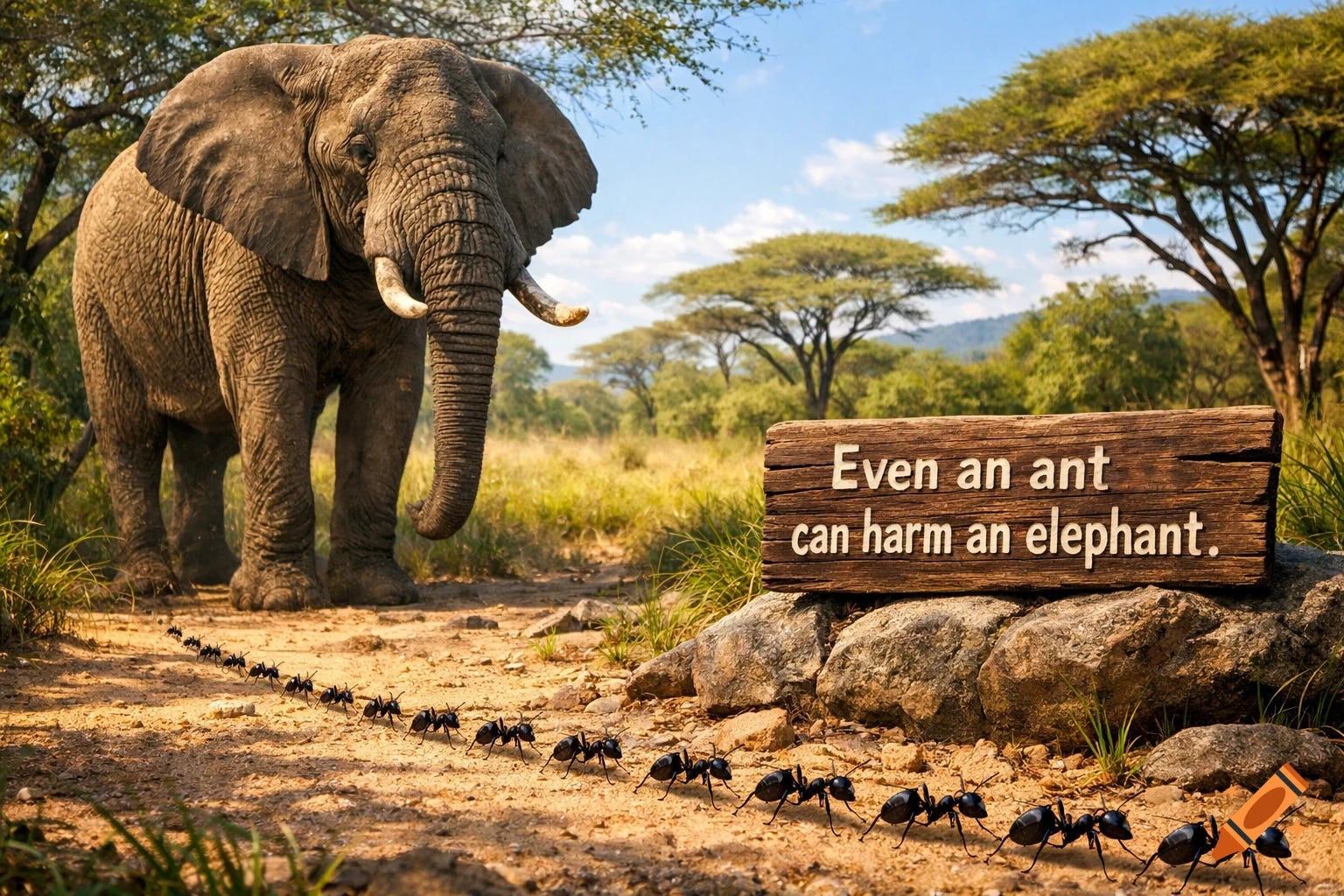
This is where we are.
The oligarchs are the elephant—massive, powerful, seemingly invincible. They've spent hundreds of millions purchasing both political parties. They've secured billions in government contracts. They've dismantled regulatory agencies. They've built surveillance infrastructure. They control the platforms where information flows.
They look unstoppable.
But they have vulnerabilities. And you are the ants.
The Elephant's Vulnerabilities
They need your attention. Without it, their platforms generate no revenue. The chaos culture only works if you participate.
They need your subscriptions. Disney proved this. Seven million people canceling subscriptions in one month created a problem they fixed in six days. Not because Disney suddenly found its conscience. Because they lost billions and needed to stop the bleeding.
They need your division. When you fight your neighbor about politics, you're not organizing against them. The division is the product they're selling. When you refuse to buy it—when you organize across political lines—their primary weapon fails.
They need your compliance. When communities unite, authorities back down. Minnesota proved this. When neighbors who disagreed about politics agreed about authoritarianism and showed up in massive numbers, coordinated at the neighborhood level, they demonstrated that organized people have power.
Why the Ant Army Works
One person canceling a subscription is an irritant. Seven million people canceling in one month is a crisis that gets solved in six days.
One person protesting is ignored. Communities organizing across political divisions make authorities back down.
One person at a city council meeting with a sign is dismissed. Three people with the same sign are a movement.
Politicians understand this. So do oligarchs. They fear numbers. They fear coordination. They fear the moment when the ants stop fighting each other and start targeting the elephant's trunk.
This is why they spend billions keeping you divided. Because they know what happens when you're not.
The Tools That Don't Need Permission
In my previous essay, I showed you the tools that work when democracy's been captured:
Economic boycotts targeting subscription revenue. Consumer power functions even when democratic power has been purchased.
Social unity across manufactured divisions. Local organizing doesn't need Congressional approval. Your city council isn't comprehensively purchased like the federal government. Your neighbors aren't. Your community organizing doesn't require permission from politicians who've been bought.
International pressure from regulators they haven't fully captured yet. European regulators—like France, which raided X's offices over child sexual abuse material and deepfakes—still enforce laws when U.S. regulators won't. Support them publicly. Pressure U.S. politicians to cooperate with international investigations.
Building alternatives they don't control. Platform cooperatives. Decentralized social media. Local independent journalism. Mutual aid networks. Infrastructure that survives even if democracy fails completely.
Mass non-participation. Starving the algorithm by refusing to engage. Every time you stop scrolling, stop fighting online, stop participating in manufactured outrage, you stop generating their profits.
These tools work because they don't require Congress. They don't need the FTC. They don't depend on regulators who've been captured. They don't run through institutions that have been purchased.
They work because coordinated ants don't need the elephant's permission to crawl into its trunk.
Your Move
The division you feel is the product they're selling. When you buy it—when you fight your neighbor instead of organizing with them—they win.
The helplessness you feel is the result they want. When you believe nothing can change—when you keep scrolling instead of acting—they win.
The chaos you experience is the culture they built. When you participate without resisting—when you feed the algorithm instead of starving it—they win.
But when coordinated ants target the elephant's vulnerability, they lose.
Think globally, act locally. The federal government is comprehensively purchased. But your city council isn't. Your neighbors aren't. Start there.
Get organized. One person is an irritant. Three people are a movement. Numbers create power. Politicians fear it. So do oligarchs.
Be persistent. As abolitionist Frederick Douglass said: "Power concedes nothing without a demand. It never did and it never will." The struggle requires sacrifice. There's no easy way. But there's no alternative either.
Coordinate your action. The elephant can trample individual ant colonies. But an army of ants, working together, targeting the vulnerability—that's what drives the elephant mad.
They bought both parties. They captured the regulatory system. They secured billions in government contracts. They made over $18 trillion from chaos.
But they need us.
Our attention. Our subscriptions. Our participation. Our division.
And that's their vulnerability.
In my previous essay, I showed you how they built the chaos culture. In this essay, I've shown you how they purchased protection and turned government into their partner.
Now you understand why the tools from Essay 1 are the only ones that might work—because every other path runs through institutions they've already bought.
The question isn't "Can we restore democracy as it was?"
The question is "Can enough ants coordinate to remake what the elephant trampled?"
Disney lost billions in one week. Imagine what happens when millions coordinate for a month. For a year. For as long as it takes.
One ant is an irritant. An army of ants targeting the vulnerability is unstoppable.
The chaos culture only works if we keep participating.
Your move.
About the Author
Bette Hanson is the founder of Multi Dimensional Healing, a consciousness work practice offering personal sessions and group work. Her work explores the relationship between consciousness and power, examining how shifts in understanding create openings for genuine transformation. She writes to help people navigate moments when old paradigms break down and new possibilities emerge—recognizing both what's ending and what might be built in its place.
Betty, you are ON FIRE with these posts and your message clarity! Thanks for helping me see and rethink things.